
Contents
Dehydration can happen when your body loses more fluid than it takes in. It may occur after excessive sweating, fever, vomiting, diarrhoea, exercise, spending too much time in hot weather or simply not drinking enough water.
Many people think dehydration only means feeling thirsty. However, your body can give you several other warning signs before dehydration becomes serious.
Recognising these signs early can help you replace lost fluids and prevent the condition from becoming severe.
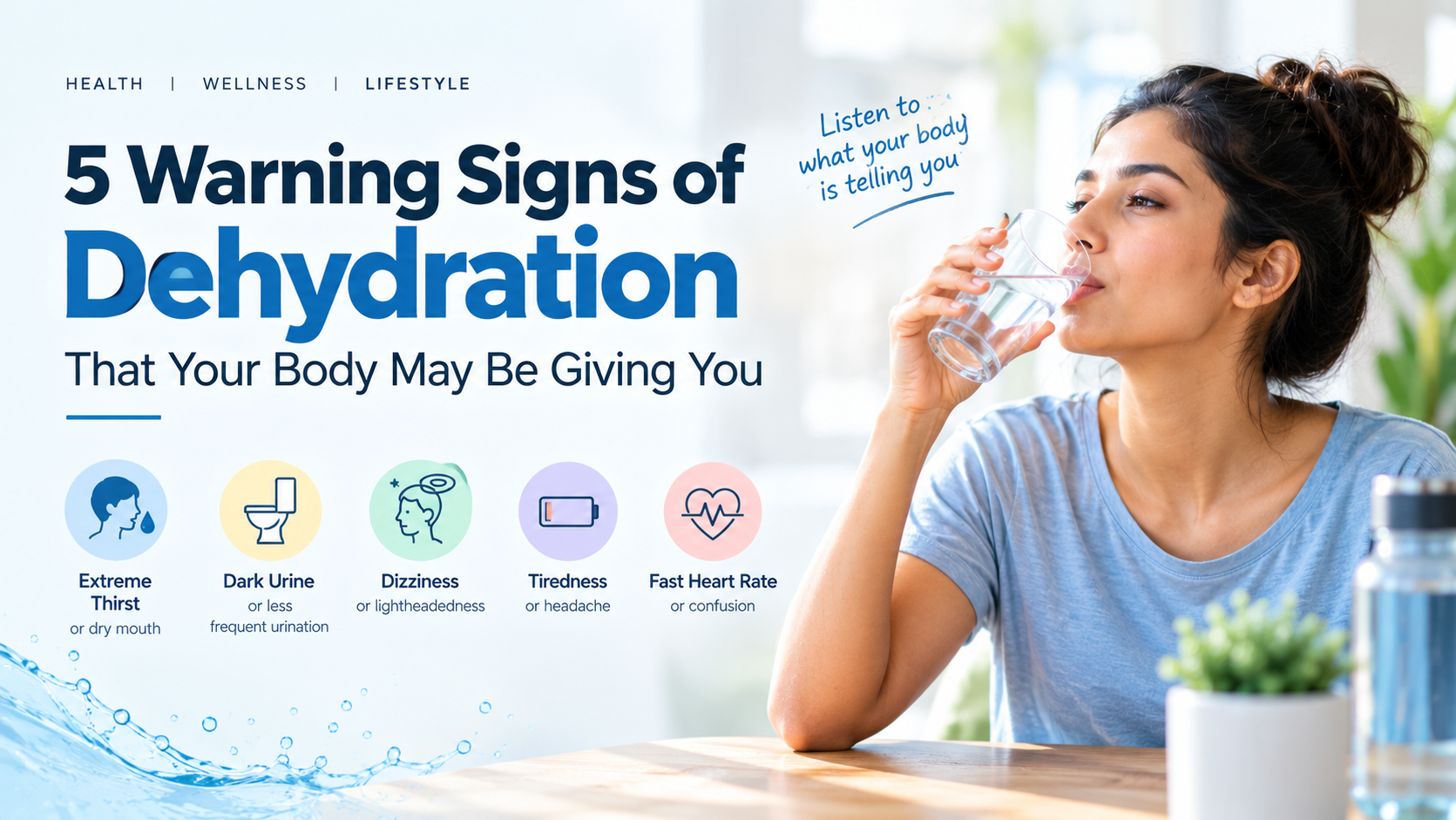
Here are five warning signs of dehydration that you should not ignore.
1. You Feel Extremely Thirsty or Have a Very Dry Mouth
One of the earliest and most common signs of dehydration is increased thirst.
When your body does not have enough fluid, the brain signals you to drink more. You may notice that your mouth, lips or tongue feel unusually dry or sticky. Some people may also experience a dry or uncomfortable feeling in the throat.
The NHS lists thirst and a dry mouth, lips and tongue among the common symptoms of dehydration.
What you can do
If you are thirsty and otherwise feeling well, start drinking fluids. Take regular sips rather than waiting until you become extremely thirsty.
If vomiting or nausea is making it difficult to drink, small frequent sips may be easier to tolerate.
2. Your Urine Becomes Dark Yellow or You Are Urinating Less
Your urine can provide a useful clue about your hydration status.
Dark yellow, strong-smelling urine and urinating less frequently than usual can be signs that your body needs more fluid. In contrast, regularly passing pale urine generally suggests that you are taking in enough fluid, although urine colour can be affected by some medicines, supplements and medical conditions.
The NHS identifies dark yellow urine and reduced urination as important symptoms of dehydration.
Pay attention to changes
Do not focus on one isolated bathroom visit. Instead, notice whether your urine has become consistently darker or whether you are going much less often than usual.
If reduced urination occurs along with dizziness, unusual tiredness or a fast heartbeat, dehydration may be becoming more serious and medical advice may be needed.
3. You Feel Dizzy, Lightheaded or Unsteady
Feeling dizzy or lightheaded can also be a warning sign of dehydration.
Fluid loss can affect the body’s normal circulation and may cause you to feel weak or dizzy, particularly when standing up.
The NHS lists dizziness and lightheadedness among the symptoms of dehydration. It also advises seeking urgent medical advice when dizziness on standing does not go away.
This symptom can have many other causes, so dizziness does not automatically mean that you are dehydrated. However, if it happens after heavy sweating, vomiting, diarrhoea, fever or prolonged exposure to heat, dehydration is one possible explanation.
What should you do?
Sit or lie down if you feel faint. Move to a cool place if you have been exposed to heat and start taking fluids if you are able to drink.
If the dizziness is severe, persistent or accompanied by confusion, fainting or difficulty staying awake, seek urgent medical care.
4. You Feel Unusually Tired or Develop a Headache
Dehydration can make you feel unusually tired, weak or lacking in energy. Headache can also occur.
The NHS lists tiredness and headache among symptoms associated with dehydration.
This can be easy to overlook because tiredness and headaches can have many causes, including poor sleep, stress, illness and skipped meals.
However, if you have been sweating heavily, exercising, spending time in hot weather or losing fluids through vomiting or diarrhoea, these symptoms may be your body’s signal that you need to replace fluids.
Don’t ignore a combination of symptoms
A headache by itself does not necessarily indicate dehydration. But if a headache occurs together with strong thirst, dry mouth, dark urine or dizziness, dehydration becomes more likely.
5. Your Heart Rate Increases or You Become Confused
A fast heartbeat can be a warning sign that dehydration is becoming more significant.
As fluid levels fall, the body has to work harder to maintain normal circulation. The NHS lists a fast heart rate and rapid breathing among signs that can occur with serious dehydration.
Confusion, unusual sleepiness or difficulty waking up are much more serious warning signs. They can indicate severe dehydration or another medical emergency.
The NHS advises immediate emergency care when dehydration is accompanied by confusion, unusual sleepiness, difficulty breathing or other signs of shock.
If someone is confused or difficult to wake, do not simply assume they need a glass of water. They should receive urgent medical attention.
What Causes Dehydration?
Dehydration can happen for several reasons.
Common causes include:
- Not drinking enough fluids
- Excessive sweating
- Hot or humid weather
- Fever
- Vomiting
- Diarrhoea
- Intense physical activity
- Excessive alcohol consumption
- Certain medicines that increase urination
- Some medical conditions
The risk can be higher in babies, young children and older adults. People who are already ill can also become dehydrated more easily.
Dehydration During Hot Weather
Hot weather deserves particular attention because the body loses fluid through sweating.
If you spend a long time outdoors, exercise in the heat or work in a hot environment, drink fluids regularly and take breaks in a cool or shaded place.
Do not wait until you feel extremely thirsty before thinking about hydration.
What Should You Drink When You Are Dehydrated?
For mild dehydration, drinking water or other suitable fluids can help replace lost fluid.
However, dehydration caused by significant vomiting or diarrhoea can involve loss of important electrolytes as well as water. In these situations, an oral rehydration solution, commonly called ORS, can help replace water and electrolytes.
WHO recommends oral rehydration solution as an effective way to prevent and treat dehydration caused by diarrhoeal illness.
If you are using a commercially prepared ORS packet, prepare it exactly according to the instructions on the packet.
If vomiting makes drinking difficult, taking small, frequent sips may be easier than drinking a large amount at once.
When Is Dehydration an Emergency?
Most mild cases can improve when lost fluids are replaced. But severe dehydration can become dangerous.
Seek urgent medical help if dehydration is accompanied by:
- Confusion
- Severe weakness
- Fainting
- Difficulty staying awake
- Very little or no urine
- A very fast heartbeat
- Rapid breathing
- Inability to drink or keep fluids down
- Severe dizziness that does not improve
- Signs of shock
Severe dehydration may require treatment in a hospital, including intravenous fluids in some cases.
How Can You Prevent Dehydration?
You can reduce your risk of dehydration by making fluids a regular part of your daily routine.
Simple habits that can help:
- Drink fluids regularly throughout the day.
- Increase your fluid intake when you are sweating heavily.
- Carry water when travelling or spending time outdoors.
- Pay attention to your urine and bathroom habits.
- Replace fluids after heavy exercise.
- Take extra care during hot weather.
- If you have vomiting or diarrhoea, consider an appropriate ORS after discussing it with a pharmacist or healthcare professional.
- Make sure children and older adults have regular access to fluids.
Remember that your fluid needs are not exactly the same for everyone. Weather, physical activity, age, illness and medical conditions can all affect how much fluid you need.
The Bottom Line
Dehydration does not always begin with a dramatic symptom. Your body may first signal the problem through increased thirst, a dry mouth, darker urine, dizziness, unusual tiredness or headache.
The important thing is to recognise a combination of symptoms and act early.
If dehydration becomes severe, symptoms such as very low urine output, rapid heartbeat, confusion, extreme weakness or difficulty staying awake require prompt medical attention.
Health Disclaimer: This article is for general health information only and is not a substitute for diagnosis or treatment from a qualified healthcare professional. If symptoms are severe, persistent or rapidly worsening, seek medical care.