
Contents
Protein is one of the most important nutrients your body needs. It helps build and repair muscles, supports bones, skin and other tissues, and plays a role in many important functions in the body.
Today, protein powders have become extremely popular among gym-goers, athletes and people trying to increase their protein intake. Whey protein, plant protein and other protein supplements are widely available.
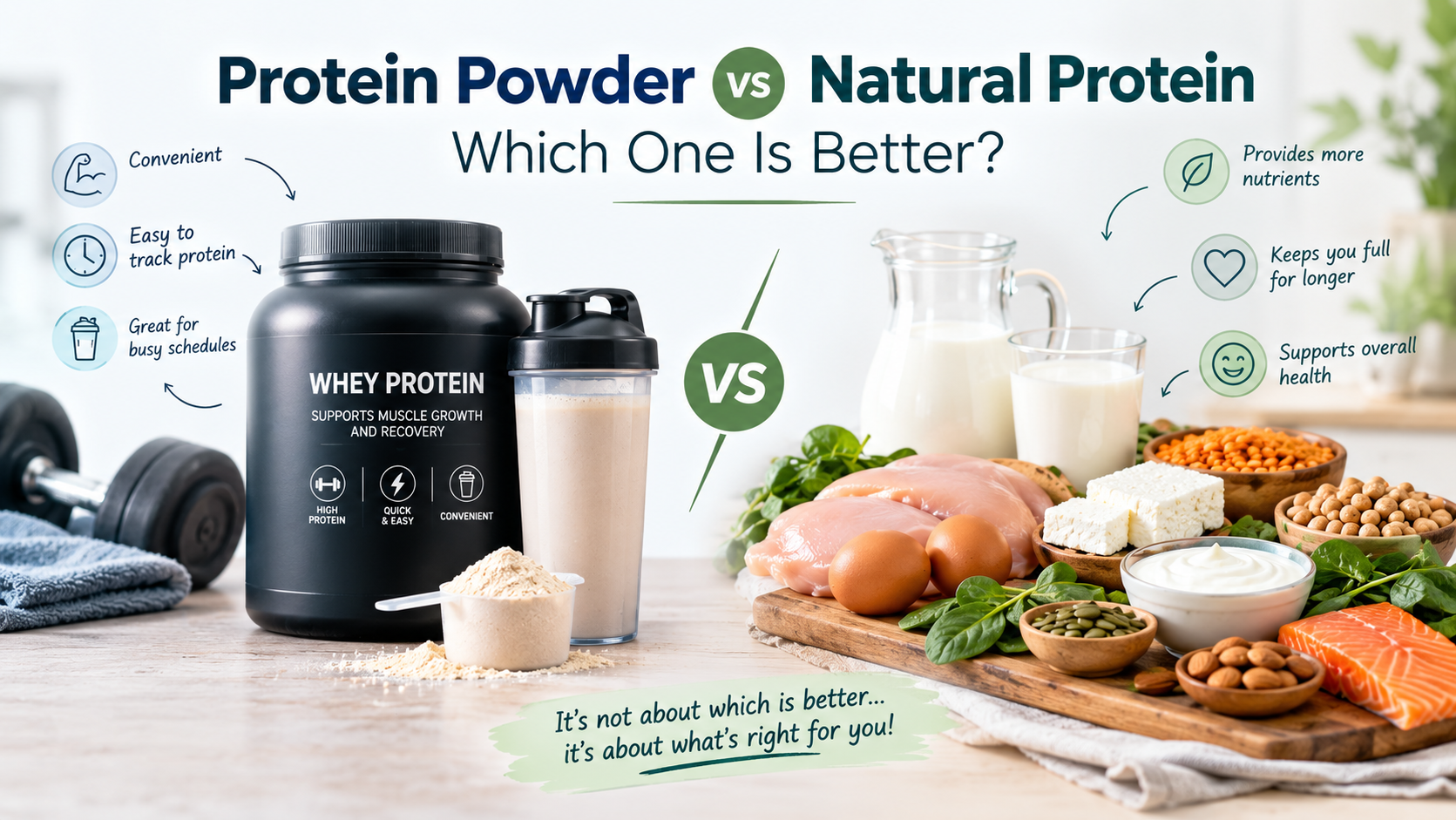
But does protein powder actually offer more benefits than natural protein from foods such as eggs, milk, curd, chicken, fish, paneer, soybeans, beans and lentils?
The answer is not necessarily.
For most healthy people, natural protein-rich foods can provide all the protein the body needs. Protein powder can be useful when getting enough protein from regular meals is difficult, but it should generally be considered a supplement rather than a replacement for a balanced diet.
What Is Natural Protein?
Natural protein means protein that comes from regular foods rather than a protein supplement.
Common sources include:
- Eggs
- Milk
- Curd and Greek yogurt
- Paneer
- Chicken
- Fish
- Soybeans and tofu
- Dal
- Rajma
- Chickpeas
- Peas
- Nuts and seeds
- Whole grains
These foods do not provide only protein. Depending on the food, they can also provide vitamins, minerals, healthy fats, carbohydrates and dietary fibre.
For example, lentils provide protein along with fibre, while fish can provide protein and beneficial omega-3 fatty acids. Harvard’s Nutrition Source notes that the overall “protein package” matters because foods bring other nutrients along with their protein.
What Is Protein Powder?
Protein powder is a concentrated source of protein made from different ingredients.
Common types include:
Whey Protein
Whey is derived from milk. It is widely used because it is a high-quality protein source and contains all essential amino acids.
Casein Protein
Casein is another milk protein. It is digested more slowly than whey.
Soy Protein
Soy protein comes from soybeans and can be a useful option for people following a vegetarian or vegan diet.
Pea Protein
Pea protein is made from yellow peas and is commonly used in plant-based protein supplements.
Protein powders can also contain flavourings, sweeteners, thickeners, vitamins, minerals and other ingredients. Therefore, checking the ingredient and nutrition labels is important.
Protein Powder vs Natural Protein: Main Differences
1. Natural Food Provides More Than Protein
One of the biggest advantages of natural protein foods is that they often provide several nutrients together.
For example:
Eggs: protein, fats and several vitamins and minerals.
Fish: protein and omega-3 fatty acids in fatty fish.
Dal and beans: protein, carbohydrates, fibre and minerals.
Milk and curd: protein, calcium and other nutrients.
Nuts and seeds: protein, healthy fats, fibre and minerals.
Protein powder is more concentrated, but it generally does not provide the same variety of nutrients found in a complete meal.
This is why replacing nutritious meals with shakes simply because they contain protein is usually not a good approach.
2. Protein Powder Is More Convenient
This is where protein powder has a clear advantage.
A person who needs more protein may find it difficult to prepare eggs, chicken, paneer or dal every time.
A protein shake can be prepared within minutes.
This can be particularly convenient for:
- People with busy schedules
- Athletes
- People who exercise regularly
- People who struggle to eat enough protein
- People travelling frequently
- People with limited appetite
So while protein powder may not be nutritionally superior to natural food, it can be more convenient.
3. Natural Protein Can Be More Filling
Protein-rich foods usually take longer to eat and digest than a simple shake, particularly when the meal also contains fibre and other whole-food components.
For example, a meal containing dal, vegetables and whole grains provides protein along with fibre and carbohydrates.
A protein shake may provide a similar amount of protein with much less food volume.
For someone trying to control overall food intake, the choice between a shake and a complete meal may therefore depend on the person’s goals and eating pattern.
4. Protein Powder Makes It Easier to Track Protein Intake
One scoop of protein powder often provides a clearly stated amount of protein.
This can make tracking easier for people who follow a structured fitness or nutrition plan.
With natural foods, protein content varies according to the food, portion size and preparation.
However, this convenience does not mean that everyone needs protein powder.
Harvard notes that most healthy adults can obtain sufficient protein from a varied diet.
Which Is Better for Muscle Building?
This is one of the biggest reasons people use protein powder.
The important point is that your muscles need protein, not protein powder specifically. If you are working on muscle growth, also read our guide on how to strengthen muscles at home.
Protein from food and protein from supplements both contribute amino acids that the body can use for muscle protein synthesis.
For people doing resistance training, increasing total protein intake can support gains in muscle mass and strength when overall nutrition and training are appropriate.
A large systematic review and meta-analysis involving 49 studies and 1,863 participants found that protein supplementation increased gains in muscle strength and fat-free mass during prolonged resistance training. However, the researchers also found that the benefit did not continue to increase once total daily protein intake reached approximately 1.6 grams per kilogram of body weight per day.
This does not mean everyone needs 1.6 g/kg every day. Protein requirements vary according to age, body size, physical activity, health status and individual goals.
For healthy adults, the basic recommended intake is around 0.8 g of protein per kilogram of body weight per day. People doing strenuous resistance training may require more. Harvard’s exercise nutrition guidance cites approximately 1.4–2.0 g/kg/day for people engaged in strenuous exercise to build or maintain muscle.
Does Protein Powder Build Muscle Faster?
Not by itself.
Protein powder cannot replace resistance training, adequate calories, sleep and an overall balanced diet.
If someone is already consuming enough protein through food, adding large amounts of protein powder is unlikely to provide unlimited additional muscle-building benefits.
The meta-analysis found that resistance exercise itself was a much stronger stimulus for increasing strength than the additional effect of protein supplementation. Beginners should also learn about common workout mistakes to avoid injuries and get better results from their exercise routine.
In simple words:
Training + adequate protein + enough recovery = muscle growth.
Protein powder is simply one way of providing some of that protein.
Is Protein Powder Safe?
For most healthy adults, protein powder can be used as part of a balanced diet when consumed appropriately.
However, “protein powder” is not one single product. Ingredients and quality can vary significantly between products.
Some powders contain:
- Added sugar
- Artificial sweeteners
- Flavouring agents
- Thickeners
- Vitamins and minerals
- Other supplements or ingredients
Harvard recommends reading nutrition and ingredient labels before purchasing protein powders.
People with certain medical conditions may also need to be more careful about protein intake. Those with kidney or liver disease, for example, should discuss their protein requirements with their healthcare professional rather than independently starting a high-protein diet.
Can Protein Powder Cause Side Effects?
Some people may experience digestive problems after taking certain protein powders.
Possible problems include:
- Bloating
- Gas
- Stomach discomfort
- Diarrhoea
- Nausea
This can depend on the type of protein, the amount consumed and other ingredients in the product.
People who have difficulty digesting dairy may have problems with whey or casein products. Plant-based alternatives may be more suitable for some individuals.
If a protein powder repeatedly causes symptoms, it is better to stop using it and discuss the problem with a healthcare professional or dietitian.
Natural Protein vs Protein Powder for Weight Loss
Neither automatically causes weight loss.
Weight management depends on overall calorie intake, food quality, physical activity and other lifestyle factors.
Protein can help make meals more satisfying, but a protein shake can also add calories to the diet if it is consumed on top of an already adequate diet.
For weight management, the better choice is usually the one that fits your overall eating plan.
For example, a meal containing eggs, vegetables and whole grains may provide protein along with fibre and other nutrients.
A protein shake may be useful when someone needs a convenient, relatively controlled way to add protein without preparing a full meal.
Protein Powder vs Natural Protein: Simple Comparison
| Feature | Natural Protein | Protein Powder |
|---|---|---|
| Protein quality | Excellent options available | Depends on source |
| Convenience | Requires preparation | Very convenient |
| Other nutrients | Often provides vitamins, minerals and fibre | Depends on product |
| Portion control | Requires measuring food | Usually easy to measure |
| Muscle support | Yes | Yes |
| Suitable for daily use | Yes, as part of a balanced diet | Can be used when appropriate |
| Cost | Varies by food | Varies by product |
| Need for everyone | No | No |
| Best advantage | Complete food nutrition | Convenience |
Who May Benefit From Protein Powder?
Protein powder can be useful for people who:
- Struggle to meet their protein needs through food
- Have a busy lifestyle
- Exercise regularly and have higher protein requirements
- Need a convenient post-workout option
- Have difficulty preparing protein-rich meals
- Follow a vegetarian or vegan diet and find it difficult to obtain enough protein from food
However, the need for supplementation should ideally be based on the person’s diet and nutritional requirements rather than fitness trends.
Who May Not Need Protein Powder?
You may not need protein powder if you already get enough protein from your regular diet.
For example, someone eating a balanced diet containing eggs, dairy, dal, beans, soy, nuts, seeds, fish or lean meat may already be meeting their protein needs.
In such cases, buying protein powder may simply add unnecessary expense.
Harvard recommends prioritising healthy protein foods rather than relying on expensive protein shakes or powders when adequate protein can be obtained through food.
How to Choose a Protein Powder
If you decide to use protein powder, do not choose a product only because it has an attractive package or promises rapid muscle growth.
Check:
1. Protein per serving
Look at how much actual protein the product provides per serving.
2. Added sugar
Some flavoured products contain significant amounts of added sugar.
3. Ingredient list
Look for a relatively simple ingredient list that matches your dietary requirements.
4. Allergens
Check whether the product contains milk, soy or other ingredients you need to avoid.
5. Quality testing
Choose products from reputable manufacturers and, where available, look for credible independent quality testing or certification.
6. Your actual requirement
Do not automatically take multiple servings simply because you exercise.
More protein is not always better.
Natural Protein Foods You Can Add to Your Diet
If you want to increase protein without using supplements, consider adding:
- Eggs
- Paneer
- Curd or Greek yogurt
- Milk
- Chicken
- Fish
- Soy chunks
- Tofu
- Dal
- Rajma
- Chickpeas
- Peanuts
- Almonds
- Seeds
For vegetarians, combining different plant protein sources across the day can help provide a broad range of essential amino acids.
So, Which One Is Better?
For most people, natural protein from a balanced diet should be the first choice.
Natural protein foods provide protein along with other useful nutrients and can form part of complete meals.
Protein powder is best viewed as a convenience tool. It can be helpful when you cannot consistently get enough protein from food, especially if you exercise regularly or have a busy schedule.
There is no rule saying that someone who goes to the gym must drink protein shakes.
Likewise, there is no reason to avoid protein powder simply because it is a supplement if it is appropriate for your nutritional needs.
The better choice depends on your diet, lifestyle, health and protein requirements.
The Bottom Line
Natural protein is not inferior to protein powder.
Your body uses the protein and amino acids it receives, regardless of whether they came from an egg, dal, paneer, chicken, fish, soy or a protein shake.
For general health, prioritise a varied diet based on nutritious protein foods.
If you struggle to reach your protein target, a good-quality protein powder can be a convenient addition.
And if your goal is muscle gain, remember that protein is only one part of the equation. Consistent resistance training, adequate calories, recovery and sleep are also important.
Health Disclaimer: This article is intended for general educational purposes and does not replace personalised medical or nutritional advice. People with kidney disease, liver disease, food allergies, digestive problems or other medical conditions should consult a qualified healthcare professional before making major changes to their protein intake.